
The Unseen Brilliance of Artists Who Found Fame Too Late
There’s a haunting beauty in the brilliance that goes unnoticed. These are the stories of artists who poured their souls into their craft, only to fade away before the world recognized their genius. Their legacies, though, would eventually touch millions, even if they never experienced the recognition they so desperately deserved.
The music industry has witnessed countless talents slip through the cracks during their lifetimes, only to be rediscovered and celebrated years or even decades after their deaths. Let’s explore the lives of three extraordinary artists whose stardom arrived too late.
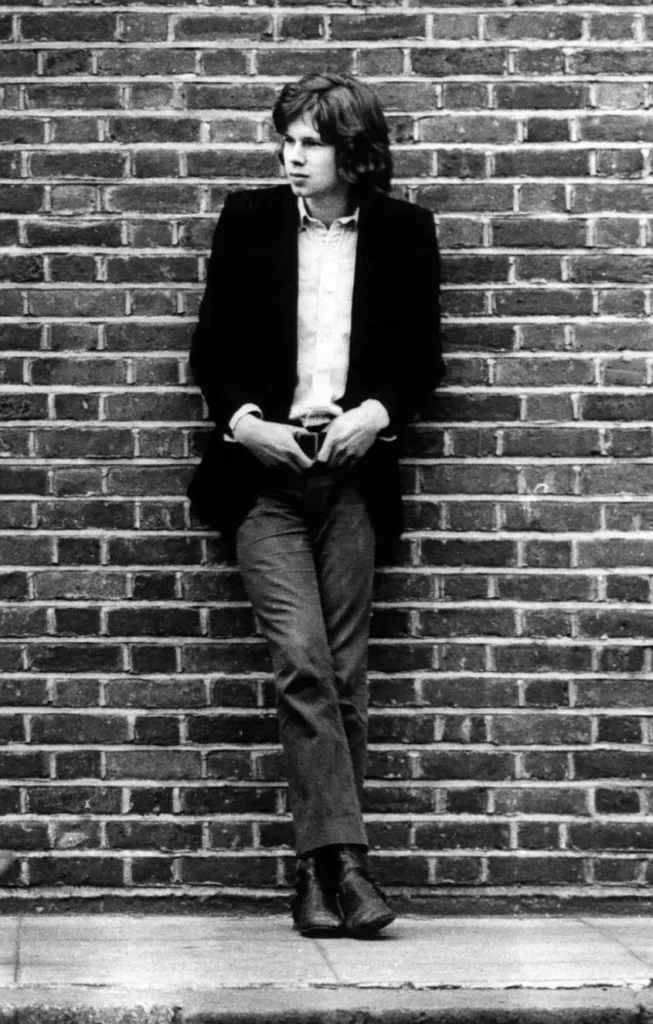
Nick Drake: The Shy Troubadour Who Found Fame in a Volkswagen Commercial
Nick Drake was a folk singer whose delicate, melancholic songwriting was far ahead of its time. Born in England in 1948, he died in 1974, having recorded only three albums during his lifetime. His introspective lyrics and intricate fingerpicking failed to find commercial success during his life.
Drake released three albums—Five Leaves Left, Bryter Layter, and Pink Moon—by 1972, but none sold more than 5,000 copies. He was painfully shy and awkward on stage, often appearing terrified of performing live. Those who saw him perform remember an awkward, nervous guy who seemed horribly uncomfortable and mumbled his way through his sets.
Living on a £20-a-week retainer from Island Records, he lived in poverty, unable to buy new clothes. His mental health deteriorated rapidly in the early 1970s. On November 25, 1974, after his meagre weekly retainer had expired, he took an overdose of an antidepressant called amitriptyline at his parents’ home where he was living. He was found dead by his mother that morning.
Then something remarkable happened. By the early 1980s, several big stars, including Robert Smith of The Cure, Kate Bush, and Paul Weller, began to cite Drake as an influence. In 1999, his song “Pink Moon” appeared in a Volkswagen commercial, captivating audiences with its nearly 30-year-old sound. Drake’s album sales spiked exponentially. Following the use of his track “Pink Moon” in the commercial, Pink Moon sold more copies that year alone than in all the years since its 1972 release combined.
Eva Cassidy: The Voice That Found Its Audience Two Years After Silence

Eva Cassidy was an American singer who had been performing for years but remained virtually unknown until her tragic death from melanoma in 1996, at the age of 33. She was intensely shy and particular about her music, often bouncing between genres from jazz to folk to blues. Despite her self-consciousness, she managed to release one solo album during her lifetime, which she financed herself and sold in person from the trunk of her car.
Cassidy died without a record contract. Her cause of death was a malignant melanoma that spread to her lungs and bones. She had the melanoma removed in 1993, but failed to follow up with her doctor in the months afterward. By 1996, she was experiencing pain in her hip. When she had it X-rayed, doctors learned the cancer had spread. She immediately started aggressive treatments, but it was too late. She died just two months later.
Her final performance was heartbreaking. Bald from chemotherapy, her head covered in a black velvet cap, she used a walker to get out on stage. She sang “What a Wonderful World.”
Two years after her death, everything changed. Cassidy’s music was brought to the attention of British fans when her versions of “Fields of Gold” and “Over the Rainbow” were played on national radio. Soon after, her album Songbird reached number one in the UK, and she has since sold over 10 million records around the world. A series of posthumous releases followed, three of which reached number one in the U.K. with total sales under 10 million copies.
Jeff Buckley: The Haunting Voice Silenced by the Mississippi

Jeff Buckley was a musician whose emotional depth in his songs was beyond comprehension. He was one of the most gifted musicians, born in 1966. His first studio album, Grace, was released in 1994 but received modest success. Tragically, Buckley drowned in 1997 at the age of 30, just as his career was starting to pick up.
According to reports, his financial woes were severe. Despite signing what should have been a major money-making deal with Sony, Buckley’s debt issues were so bad that he couldn’t even fund a down payment on a $40,000 fixer-upper house. Grace was a very good record, but outside of a small group of early fans, Buckley struggled to gain traction, despite spending close to three years on the road promoting the album.
The tragedy occurred on a warm evening in Memphis. On May 29, 1997, Jeff decided to wade into Wolf River Harbor, a channel of the Mississippi River. Fully clothed and already weighed down, he was caught in the wake of a passing boat and was pulled under. His body was found five days later. An autopsy ruled that he died of an accidental drowning.
After his death, his haunting rendition of Leonard Cohen’s “Hallelujah” became iconic, achieving worldwide recognition. As the news of Buckley’s death spread, interest in the Grace album picked up considerably. Material for that second album was released under the title Sketches for My Sweetheart the Drunk. His cover of “Hallelujah” has since become one of the most celebrated versions of the song, introduced to millions through films, television shows, and countless tribute performances.