

The Creation of a Generation X Classic
John Hughes’ “The Breakfast Club” is, for better or worse, the defining Generation X comedy. It was a box office hit during its theatrical release, and over time, became a film that its many fans could quote chapter and verse. The tale of five very different high school students — a brain (Anthony Michael Hall), an athlete (Emilio Estevez), a basket case (Ally Sheedy), a princess (Molly Ringwald), and a criminal (Judd Nelson) — brought together for an all-day detention on a Saturday continues to resonate, which is a testament to John Hughes’ ability to get on teenagers’ volatile emotional wavelength and the perfectly pitched performances from his cast of up-and-coming actors.
Casting Challenges and Last-Minute Changes
Slotting the right actors into the right roles proved a bit of a challenge for Hughes and casting director Jackie Burch, particularly when it came to the role of hellraiser John Bender. Estevez initially landed the part, but Hughes liked him more as jock Andrew Clark. Nicolas Cage and Alan Ruck were considered for Bender, but Hughes wound up casting John Cusack … for a moment. When the writer-director realized Cusack lacked the physically intimidating presence that made Bender the straw that stirs the drink, he turned to Nelson. Hughes obviously made the right call, but this decision came with its share of problems.
Nelson had done a Bender dry-run in the 1984 Cannon teen comedy “Making the Grade.” It was a largely forgettable entry in the flourishing genre of that decade, but Nelson impressed as a smartass con artist hired by a rich kid to attend and graduate from prep school for him (this makes just as much sense in the actual movie, too). You wanted to see more from him, but Hughes and his cast wound up seeing a bit too much of him.
Judd Nelson’s Method Acting and On-Set Tensions
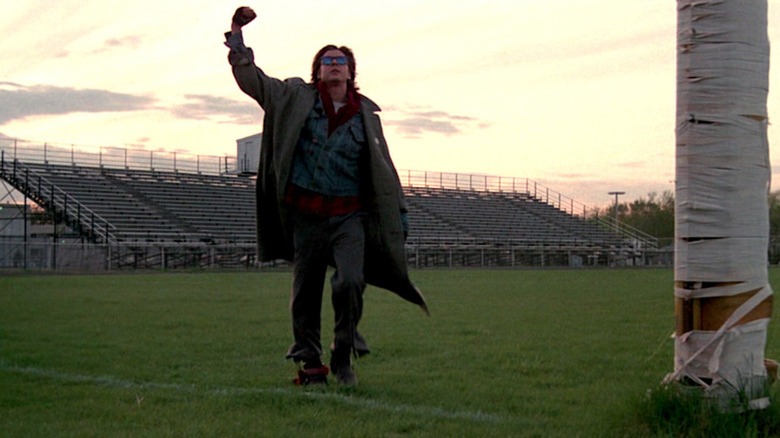
According to a 1999 oral history of “The Breakfast Club” published by Premiere Magazine, Nelson went a little method in his portrayal of Bender. As unit publicist Fredell Pogodin said, “Judd could be arrogant as anything, but he was really smart, really quick-witted. And he was an uncanny observer. He knew where your Achilles’ heels were.”
Like his character, Nelson went particularly hard at Molly Ringwald — which, interestingly, bothered Hughes more than it did Ringwald. Per the star of “Sixteen Candles” and “Pretty in Pink”:
“Judd was getting a little bit in character, trying to get under my skin, adlibbing a lot of stuff that was meant to be offensive to me. I didn’t think it was such a big deal, but John was very protective of me, and he may have had other issues. All of a sudden it was like, ‘That’s it — I’m going to fire him. I don’t have time for this s***.'”
“My feeling was that Bender should be an incredible a**hole,” said Nelson. “I wanted him to be poised for violence from the get-go. So when I started out, it was like, ‘Whoa! That’s too much!'”
Hughes was worried that Nelson’s approach would turn Bender into an unlikable bully. There was a push-pull between the two that led to a disagreement over Bender’s claim that his dad burned him with a cigar. Hughes thought Bender “got it caught on a fence.” Nelson countered, “Of course, he was burned! Did he do it to himself? Why would he know so many caricatures about other people’s perfect families if his wasn’t a nightmare?”
Ultimately, Nelson kept his job and gave an iconic performance that gave the film its emotionally charged core. It is impossible to imagine another actor of that era as Bender, and while Nelson never topped this performance (and disappeared from Hollywood), that’s one helluva peak.
Legacy and Impact
“The Breakfast Club” remains a cultural touchstone, not only for its portrayal of teenage angst and social dynamics but also for the way it captured the essence of Generation X. The film’s success can be attributed to Hughes’ keen understanding of youth culture and the chemistry among the young cast members. Each character brought a unique perspective, and their interactions provided a nuanced look at the pressures and insecurities faced by teenagers.
The film’s influence extends beyond its initial release, with its themes and characters continuing to resonate with new generations. Its enduring popularity has led to numerous re-releases, discussions, and analyses, cementing its place in cinematic history. The film’s legacy is further enhanced by the performances of its cast, who brought authenticity and depth to their roles.
For those interested in staying updated on major movie and TV news, there are various ways to keep informed. Subscribing to newsletters, following industry publications, and using preferred search sources can provide valuable insights into the ever-evolving world of entertainment.