The Case Against Brian Walshe
Prosecutors allege that Brian Walshe planned to kill his wife, Ana Walshe, before her death on January 1, 2023. According to the charges, he then dismembered her body and disposed of the remains in dumpsters near their home in Cohasset, Massachusetts. Walshe has been charged with first-degree murder for the alleged killing, which requires the jury to believe the crime was premeditated.
The jury began deliberations after hearing eight days of witness testimony. To convict Walshe of first-degree murder, the panel must be convinced that the murder was deliberately planned. If they do not acquit him, they can also choose to convict him of second-degree murder, a less severe charge that does not require proof of premeditation.
In Massachusetts, when a defendant is charged with murder, the jury is asked to determine the degree of murder even if only first-degree is initially charged. While the jury is instructed not to consider possible punishments during deliberations, a conviction on either first- or second-degree murder could significantly impact Walshe’s future, as it may determine whether he dies in prison.
The prosecution has not provided a specific theory of how Walshe killed his wife, but they have suggested that she met a violent death in their family home. During closing arguments, Norfolk County Assistant District Attorney Anne Yas pointed to a rug that had been recovered from a dumpster at the apartment complex where Walshe’s mother lived. The rug was cut up and covered in Ana’s blood, with a piece of her necklace still embedded in the fibers.
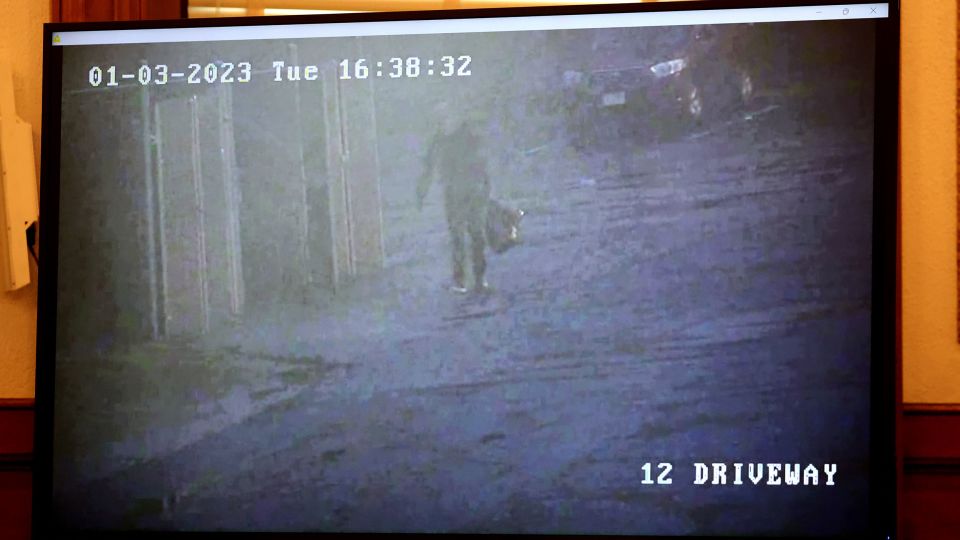
According to the commonwealth, Walshe disposed of trash bags containing Ana’s remains and other evidence in multiple dumpsters across different cities and towns in an attempt to cover his tracks. However, Walshe’s defense team claims he did not kill his wife but instead found her dead in their bed on New Year’s Day and panicked, thinking no one would believe him.
Prosecutors allege that Walshe discovered his wife’s monthslong affair with William Fastow, a man she met in Washington, DC. Yas suggested that Walshe feared losing his wife and children to a new life she was building there, especially as he faced potential prison time and a large restitution bill from a previous federal fraud conviction.
Walshe pleaded guilty to selling forged Andy Warhol artwork and was granted home confinement due to his role as the primary caregiver for their three children. Trial evidence showed that Walshe conducted internet searches about how to dispose of a body and clean up blood shortly before his wife’s death. His attorney, Larry Tipton, admitted these searches were “dark” and “troubling,” but argued there is no evidence he planned to harm his wife.
During closing arguments, Tipton emphasized that while there is evidence Walshe lied to police and disposed of his wife’s body, there is no proof he ever intended to harm her. He questioned why Walshe would search for information on body disposal if he had already planned to kill her.

Defense Strategy and Expert Opinions
Boston defense attorney J.W. Carney Jr. called the defense strategy “brilliant.” Walshe had planned to take the stand but ultimately decided not to testify, a decision that allowed the defense to rest its case without presenting any evidence.
Carney explained that admitting to disposing of the body and lying to police could help the defense counter the prosecution’s strongest evidence for a first-degree murder conviction. He noted that second-degree murder charges might serve as a compromise for the jury if they are unsure about the level of premeditation.
“If the jury comes back with a second-degree murder conviction, that would be a significant victory for the defense,” Carney said. “No prosecutor would view that as anything but a failure.”
Walshe’s possible prison time depends on the jury’s verdict. First-degree murder carries a mandatory life sentence without parole, while second-degree murder allows for parole eligibility after 15 to 25 years. Judge Diane Freniere will determine the exact terms if Walshe is convicted.
Regardless of the outcome, Walshe will also face sentencing for counts of misleading police and improper conveyance of a body. Unbeknownst to the jury, he had already pleaded guilty to those charges on the first day of jury selection.

Possible Outcomes and Legal Implications
If convicted of murder, Walshe could face consecutive or concurrent sentences depending on the court’s decision. He faces up to three years for the conveyance charge and up to 10 years for misleading police, with the possibility of an enhanced sentence if convicted of murder.
The case highlights the complexity of determining intent in homicide cases. While the prosecution argues for premeditation, the defense maintains that Walshe acted in response to his wife’s death rather than planning it.